In 1996, scientists worldwide declared that free radicals caused cholesterol crystallization and heart disease. While water-soluble antioxidants abundant in berries are important, only fat-soluble carotenoids adhere to fatty tissue like eyes, endocrine glands, organs and artery plaque.
Most foods have low levels of carotenoids, and most only yellow/orange hues. Red carotenoids are more efficient, faster quenchers of radicals — the Earth's #1 antioxidant.
483nm · 11 bonds
Capsanthin vibrates deep-red, with 11 super-conjugated double bonds
22mg / 100g
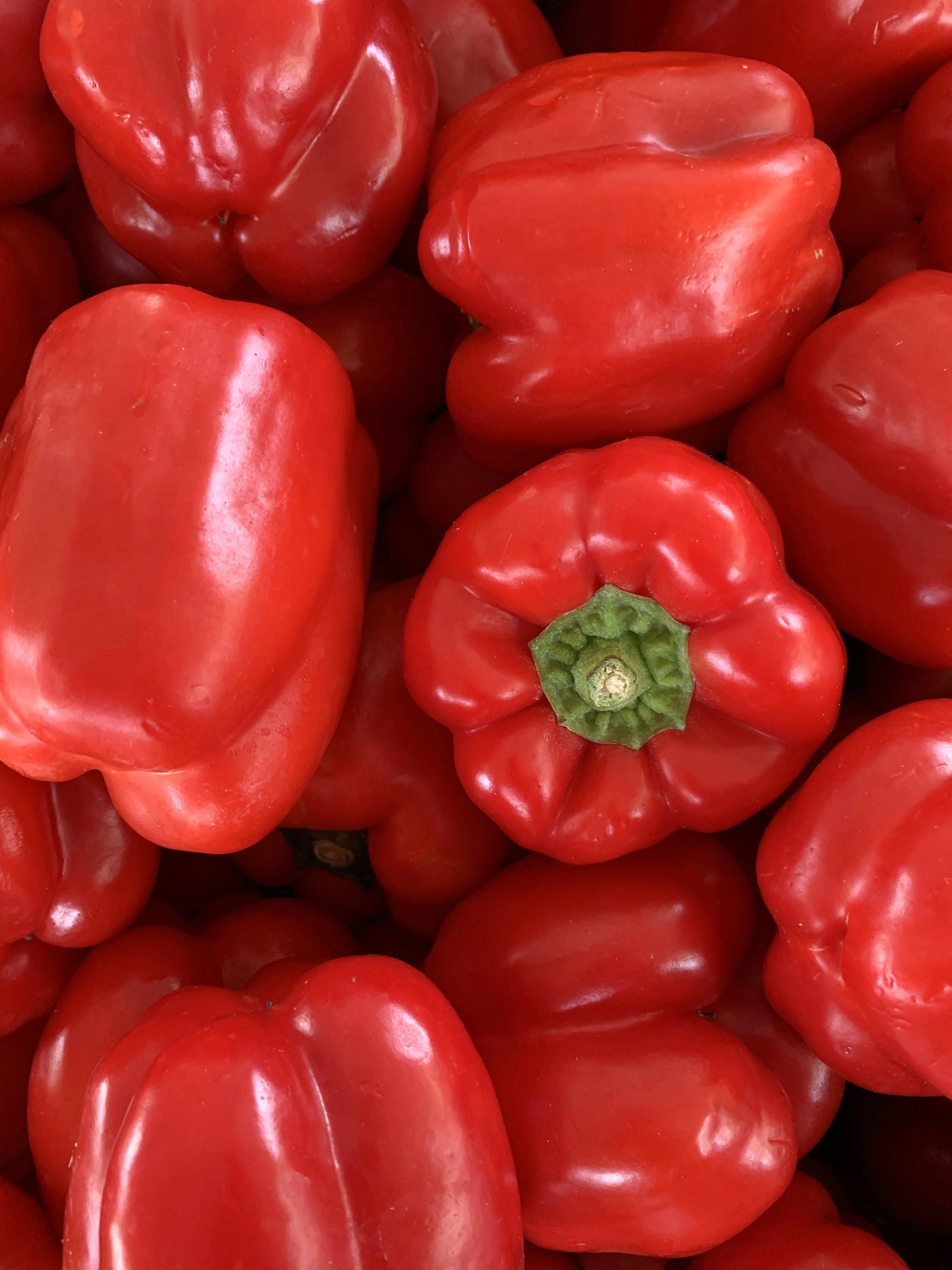
Red carotenoids in bell pepper — highest food in total carotenoids, 4× tomato
Carotenoids in Capsicum. Plant Sci 2010
166mg / 100g
Total carotenoids in Primack Pepper Paste (step-by-step instructions, page 288)
Evaluation of Red Pepper Paste as a New Food Product. Annals Of Agric 2009
Free radicals cause cholesterol crystal formation in artery plaque.
Cholesterol Crystal Formation in Artery Plaque. Free Radical Med 1996
Capsanthin's antioxidant abilities rank above beta-carotene.
Capsanthin's Antioxidant Abilities Above Beta-Carotene. Photochem 2016
CAPSANTHIN inhibits pathways that are involved in cancer progression.
Capsanthin on Triple-Negative Breast Cancer. Cell Dis 2025
CAPSANTHIN is a potential drug candidate for triple negative breast cancer.
Capsanthin Inhibits Tumor Progression. Aging 2021
IN HUMANS… paprika extract 1× daily for 30 days significantly lowered heart rate and raised exercise efficiency (oxygen delivery).
Paprika on Endurance in College Students. Nutrients 2025
Consumption of capsanthin foods may contribute to less vascular diseases.
Capsanthin Inhibits Atherosclerotic Plaque. Biomed 2022